
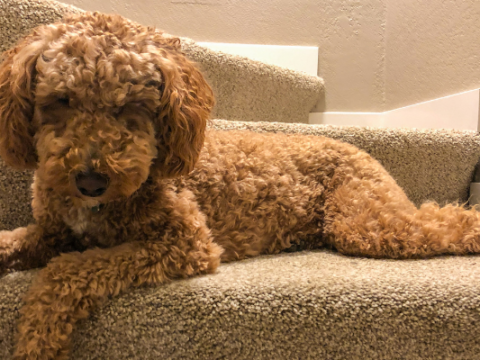
The Australian Doodle, also known as the Australian Labradoodle, is a hybrid dog breed resulting from crossing a Labrador Retriever, a Poodle, and a Cocker Spaniel. This adorable breed was developed with the goal of creating a new purebred with a breed standard and predictable traits, unlike the first-generation Labrador Poodle cross. Apart from Labradors, Poodles, and Cocker Spaniels, other breeds like the Curly Coated Retriever and Irish Water Spaniel have also contributed to the development of the Australian Doodle.
These dogs are known for their friendly and loving nature, making them excellent family pets. They come in varying sizes, weights, and coat types due to the influence of the Poodle gene. Their intelligence, inherited from both the Poodle and the Labrador retriever, and their eagerness to please, make them highly trainable and adaptable to various living conditions.
Key Takeaways
- Australian Doodles, or Australian Labradoodles, are a hybrid breed developed from Labradors, Poodles, and Cocker Spaniels, among other breeds.
- These friendly dogs are adaptable and intelligent and make excellent family pets.
- Australian Doodles come in different sizes, weights, and coat types, thanks to their diverse genetic background.
What is an Australian Doodle?
An Australian Doodle is a term that refers to two designer dog breeds; the Aussiedoodle and the Australian Labradoodle. Both of these breeds are hybrid canines, created by crossing different purebred dogs. The main goal in their breeding is to combine the desirable traits from each parent breed into one adorable, intelligent, and friendly companion.
The Aussiedoodlehttps://doodlepooch.com/are-aussiedoodles-protective/ is a mix between an Australian Shepherd and a Poodle. Poodles come in three sizes – Standard, Miniature, and Toy – which means the Aussiedoodle may vary significantly in size. This fluffy and charming breed is known for being intelligent, social, and energetic, making them a great companion for active families.
On the other hand, the Australian Labradoodle is a more complex hybrid, developed by crossing the Labrador Retriever, Poodle, and Cocker Spaniel dog breeds. Over the years, this breed has evolved through multiple generations and is distinct from other “doodle” breeds. The Australian Labradoodle is highly sought after for its teddy bear-like appearance, friendly nature, and hypoallergenic coat.
Though their origins and breed compositions differ, both the Aussiedoodle and Australian Labradoodle share similar qualities. These doodles are known for their lively personality, adorable appearance, and low-shedding coats, making them a popular choice for families with allergies. Furthermore, their intelligence and trainability make them responsive to various training methods and suitable for various dog sports, like agility and obedience competitions.
Origin and History
The Australian Labradoodle has an interesting history dating back to the 1980s. The breed originated in Australia as a solution to a problem faced by a blind woman in Hawaii who was looking for a guide dog that wouldn’t trigger her husband’s allergies. To create a hypoallergenic guide dog, breeders in Victoria, Australia, developed the Australian Labradoodle. The main person behind this innovation was Wally Conron, a puppy breeding manager for the Royal Guide Dog Association of Australia.
The first Australian Labradoodle was created by crossing a Labrador Retriever and a Standard Poodle. The Labrador Retriever is known for its hardworking nature, which made it an ideal choice for a guide dog, while the Poodle is well-known for its non-shedding coat that is less likely to provoke allergic reactions. The result of this particular crossbreed was a dog with the desirable traits of both parent breeds, known as a Labradoodle.
In addition to the Labrador Retriever and Poodle, at a later stage, breeders incorporated the Cocker Spaniel into the mix. This was done to improve the breed’s coat quality, making it more allergy-friendly and maintaining a consistent appearance. This combination of breeds eventually led to the development of the Australian Labradoodle we know today.
The term “Australian Labradoodle” was further popularised by two dog breeders in Australia, Beverly Manners of Rutland Manor and her daughter Angela Cunningham of Tegan Park. The Australian Labradoodle became known for its friendly temperament, low-shedding coat, and suitability as a guide or service dog.
Appearance of Australian Doodle
With their appearance varying depending on the parent breeds, Australian Doodles can exhibit a range of physical characteristics.
In terms of size, Australian Doodles vary from small to large, depending on the Poodle parent’s size. Poodles come in three sizes: Standard, Miniature, and Toy. Consequently, an Australian Doodle’s size can encompass a range from toy to standard-sized dogs.
One of the most striking features of an Australian Doodle is its coat. Showcasing a variety of coat types, the Australian Doodle can possess a wavy, straight, or curly coat inherited from its Poodle parent. This delightful mix is usually paired with the low-shedding and hypoallergenic qualities commonly associated with Poodle coats.
Possessing a diverse range of coat colours, the Australian Doodle is a stunning sight in all shades. These colours can include:
- Red
- Black
- White
- Apricot
- Chocolate (or brown)
- Cream
- Gold
- Blue Merle
- Parti (two or more colours)
With the Australian Shepherd parent already showcasing a variety of colours, the Australian Doodle offers one of the most extensive colour palates among doodle breeds. As the puppies mature, their colours can change, adding an exciting aspect to their appearance.
Charming and distinctive, the Australian Doodle is a wonderful pet whose unique appearance, friendly nature, and varied size and coat options make them a popular choice for dog owners and enthusiasts.
Size and Weight
Australian Doodles come in a range of sizes and weights, largely depending on their parent breeds – the Australian Shepherd and the Poodle. The Poodle’s size can vary, as Toy, Miniature, and Standard Poodles can be involved in breeding an Australian Doodle.
Miniature Australian Doodles typically have a weight range of 15-30 lbs (7-14 kg) and are small in size. They are often a good fit for families with smaller living spaces, as they are compact and easy to manage. Despite their small stature, they are energetic and devoted pets.
Medium Australian Doodles tend to weigh between 30 and 50 pounds (14-23 kg) and stand about 17 to 20 inches (43-51 cm) tall. These dogs are highly adaptable and adjust well to various living situations. They are excellent companions for active families, as they can easily participate in walks and outings.
Larger Australian Doodles, which can include the Standard Australian Labradoodle, typically weigh between 50 and 70 pounds (23-32 kg) and measure around 21 to 24 inches (53-61 cm) in height. These dogs are versatile and adapt well to different environments and have the stamina to keep up with active families.
Australian Doodle’s Temperament
Known for being intelligent and easy to train, these dogs make wonderful companions for both families and individuals. They are an absolute delight to have around the vast majority of the time.
Characterised by its friendly and loving nature, the Australian Doodle quickly becomes attached to its family members. It loves spending time with its humans, relishing every chance to play or cuddle. With energy levels to match its zest for life, the breed enjoys engaging in various activities to keep both their minds and bodies stimulated.
In addition to their playful side, Australian Doodles are gentle and calm around other animals or young children, often displaying a happy and relaxed demeanour. Their innate loyalty builds a strong bond between dog and owner, fostering a sense of security and trust.
Moreover, these dogs are known for their cheerful and sociable personalities. They thrive in company, whether interacting with people or other pets, always eager to make new friends and join in any fun. Their enthusiastic approach to life means that, with proper socialisation, they can adapt well to various environments and situations.
Health and Lifespan
The Australian Doodle has a lifespan that typically ranges between 10 and 15 years. The smaller sized Goldendoodles, a similar breed, often have a slightly longer life expectancy compared to their larger counterparts. As with any breed, maintaining a healthy lifestyle for your Australian Doodle contributes to their overall health and longevity.
One common health issue found in Australian Doodles is hip dysplasia, a condition in which the hip joint develops abnormally. This is a genetic concern that can affect both parent breeds, Poodles and Australian Shepherds, so it’s essential for breeders to screen their adult dogs to reduce the risk of passing it on to their offspring. Apart from hip dysplasia, Australian Shepherds are also prone to specific eye diseases such as cataracts, Progressive Retinal Atrophy (PRA), and Collie Eye Anomaly (CEA). As these conditions can also affect Australian Doodles, regular eye examinations by a veterinarian are crucial for early detection and treatment.
Australian Doodles may also inherit some health issues common to Poodles, although the specific conditions passed on depend on the exact type of Poodle used in the breeding. To ensure a healthy Australian Doodle, prospective pet parents should research and find an ethical breeder who meticulously screens their dogs for genetic health issues.
Training an Australian Doodle
Training an Australian Doodle can be a delightful experience for both owner and pet. These intelligent dogs are generally easy to train, as they are a hybrid of the clever Poodle and the quick-learning Australian Shepherd. Being eager to please and having a natural love for learning, they can quickly grasp the essential commands and desired behaviours.
It’s important to start training early with consistent and positive reinforcement methods. As Australian Doodles are intelligent, they require mental stimulation in addition to physical exercise. Incorporating interactive activities, such as puzzle toys and brain-teasing games, can help satisfy their need for mental engagement while developing a deeper bond with their owners.
Although these dogs are naturally gentle and well-behaved, socialisation plays a crucial role in raising a well-rounded Australian Doodle. Early exposure to various environments, other dogs, and different people can help to instil confidence and reduce the potential for anxiety or shyness in adulthood.
When approaching training sessions, owners should remember to be patient, understanding, and maintain a friendly tone of voice. Just like any other breed, Australian Doodles may take time to grasp specific commands and behaviours. Positive reinforcement, like treats and praise, can help encourage their eagerness to learn.
Exercise and Activity Levels
The Australian Labradoodle is an energetic and active breed, known for their love of exercise and play. These dogs thrive on activities like hiking, running, and playing fetch, making them perfect companions for those with an active lifestyle.
It is important to provide these dogs with at least 60 minutes of moderate to intense exercise per day. This can include activities such as running, playing fetch, and participating in obedience or agility training. Regular exercise helps maintain their physical and mental health and helps prevent boredom, which can lead to unwanted behaviours.
Alongside physical exercise, Australian Labradoodles also require mental stimulation. Engaging in interactive play sessions and incorporating puzzle toys into their daily routine is an effective way to challenge their intelligent minds.
While puppies might have lesser stamina compared to adult dogs, gradually building up their exercise routines is essential. Mini Aussiedoodle puppies, for instance, should start with 10-minute exercise sessions one to three times a day and then increase it gradually as they grow. These dogs usually reach their full physical maturity at 18 months old.
Australian Doodles as Family Pets
Australian Doodles are a friendly and loveable breed that is well-suited to family life. Due to their playful and affectionate nature, these fluffy companions quickly become beloved family members, making their way into the hearts of children and adults alike.
One of the main reasons Australian Doodles are excellent family pets is their adaptable and amiable temperament. They are particularly fond of children, being gentle and patient playmates. This breed is known to get along well with other pets, making them a great addition to a household with existing furry friends.
Training is an essential part of ensuring your Australian Doodle becomes a well-behaved family pet. Fortunately, this breed is intelligent and eager to please, making the training process straightforward and enjoyable for both the dog and the owner. Early socialisation, obedience classes, and positive reinforcement methods will help your Australian Doodle adjust to their new surroundings and family members, contributing to a harmonious household.
An added bonus of having an Australian Doodle as a pet is their low-shedding, hypoallergenic coat. This makes them an attractive choice for families with allergies or those who prefer a tidier home, minimising the need for constant cleaning. Regular grooming is necessary to keep an Australian Doodle’s coat in prime condition, ensuring they look their best and remain healthy.
Exercise is vital for an Australian Doodle’s wellbeing, given their energetic and lively nature. Daily walks and plenty of playtime in a secure garden are ideal ways to burn off energy and keep them stimulated. The breed’s intelligence and agility means they excel at dog sports like flyball or agility courses, providing enjoyable and rewarding activities that the whole family can partake in.
In conclusion, an Australian Doodle is a delightful choice for a family pet. Their gentle, friendly nature and intelligence make them well-suited to households of any size and their low-shedding coat adds to the appeal. With proper care, exercise, and training, an Australian Doodle will undoubtedly become a cherished family member, bringing joy and companionship for years to come.
Living Conditions
Aussiedoodles make wonderful companions for various living situations. With their adaptability, they can comfortably reside in apartments, as long as they receive daily exercise and attention. As a crossbreed between an Australian Shepherd and a Poodle, they inherit desirable traits from both breeds that contribute to their suitability for apartment living.
Although they are considered active family dogs, Aussiedoodles do not require an extensive amount of space to be content in their homes. Their size varies depending on their breeding; smaller sized Aussiedoodles are particularly suitable for apartments, while larger ones may require more space for indoor activities. Consequently, it is important to carefully consider the specific size and exercise needs of your Aussiedoodle when moving into an apartment.
To maintain a healthy lifestyle, regular exercise is crucial for these energetic and playful canines. This can involve daily walks, playtime at dog parks, or even indoor games designed to keep their minds stimulated. Considering their high intelligence and eagerness to please, Aussiedoodles respond well to consistent mental and physical activities, ensuring their well-being even in smaller living environments.
Overall, with their adaptable and loving nature, Aussiedoodles can thrive in a variety of living conditions, including apartments. Providing adequate exercise and mental stimulation, as well as close attention and affection, is key to ensuring a happy and healthy lifestyle for your Aussiedoodle companion.
Australian Doodle’s Behaviour with Other Pets
The Australian Doodle, a mix of the Australian Shepherd and Poodle, ent. As such, they generally get along well with other pets in the household and will even engage in play or simply enjoy the company of other furry friends.
Proper socialisation is crucial for any dog, and the Australian Doodle is no exception. Introducing your Australian Doodle to other pets at a young age can help them become familiar with various breeds, sizes and dispositions. This exposure to other animals will help your Australian Doodle develop positive experiences, which will lead to well-mannered behaviour with other pets as they grow older.
It is important to note that every individual dog can differ in their behaviour with other pets, even within the same breed. Therefore, it is crucial for owners to closely observe their Australian Doodle’s interactions and respond accordingly. Keeping your dog’s interactions supervised and positive will ensure that both the Australian Doodle and other pets in the home can develop a harmonious relationship.
Grooming Australian Doodle
Grooming an Australian Doodle is essential for keeping their coat healthy and manageable. This breed has a low to non-shedding coat, making it suitable for people with allergies. However, this also means that regular maintenance is required to prevent matting and keep the coat clean.
Brushing is a significant part of grooming for Australian Doodles. It is recommended to brush their coat at least two to three times a week to remove debris, prevent matting, and distribute natural oils throughout the coat. For this task, you may use a slicker brush, a comb, or a pin brush, ensuring that you reach the skin to remove any loose fur.
Bathing your Australian Doodle should be done as needed, typically every four-to-six weeks. Make sure to use a natural, gentle dog shampoo and conditioner that rinses out thoroughly. Brush through the coat completely before bathing to avoid tightening any existing mats.
Trimming is another essential aspect of grooming for Australian Doodles. Depending on their coat type, trimming may be required every two-to-three months. The breed’s coat can grow quite long, so regular trimming helps to keep it clean and manageable. Pay particular attention to the areas around the eyes, mouth, and paws.
To maintain the breed’s unique appearance, avoid standard cuts like the poodle or schnauzer and opt for tailor-made styles that suit their coat type and texture. You can consult with a professional groomer for advice on appropriate cuts for your Australian Doodle.
Coat Types and Colours
Types of Coats in Australian Doodle
The Australian Doodle’s coat can be classified into two primary types, which are soft and silky or fuzzy and fluffy. These coat types can further be categorised based on their texture, such as curly, wavy, or straight.
- Curly coat: This type of coat is common in Australian Doodles and usually resembles the curly coat found on a poodle. Curly coats tend to be low-shedding and hypoallergenic, making them suitable for pet owners with allergies.
- Wavy coat: A wavy coat in an Australian Doodle is less curly and somewhat looser than the curly coat variety. It is a mix between the poodle curls and the Australian Shepherd’s straighter hair. Wavy coats are also generally low-shedding and allergy-friendly.
- Straight coat: This coat type is the least common among Australian Doodles. It is more similar to the coat of an Australian Shepherd, which tends to be straight or slightly wavy. Straight coats may shed more than curly or wavy coats.
Colour Variations in Australian Doodle
Australian Doodles come in a variety of coat colours, including red, black, white, apricot, chocolate, brown, cream, gold, blue, and merle.
- Red and Apricot: Red and apricot coats are warm-toned and can vary from a deep, rich red to a lighter pastel hue. These colours often stem from the Australian Shepherd’s red coat and the poodle’s apricot coat.
- Black, White, and Blue: Black and white coats are quite common, while blue coats are a diluted version of black, which appears as a dark greyish-blue. These colours offer striking contrasts, particularly when combined in a parti or tri-coloured pattern.
- Chocolate and Brown: Chocolate and brown coats can range from a deep, dark chocolate to a lighter, milk chocolate shade. The richness of these colours adds a unique elegance to the Australian Doodle’s appearance.
- Cream and Gold: Cream and gold coats are softer, lighter shades that are reminiscent of a pale yellow or beige hue. These colours often occur when a cream or white poodle is bred with a gold Australian Shepherd.
- Merle: Merle is a distinctive coat pattern found in some Australian Doodles that can present as either blue merle or red merle. This pattern features a marbled effect with patches of different colours, creating an eye-catching and unique appearance. Merle coats are the result of breeding an Australian Shepherd with the merle pattern with a poodle.
- Parti: Parti coats are those that have two distinct colours, with at least 50% of the coat being white. This pattern can appear in various colour combinations, such as black and white, red and white, or chocolate and white.
Allergen Factors
The Australian Doodle is known for its allergy-friendly qualities, thanks in part to the hypoallergenic nature of one of its parent breeds, the Poodle. This breed’s coat, which tends to be wavy or tightly curled, captures dander and keeps it from releasing into the environment. If an Australian Doodle inherits more of the Poodle’s coat type, they are likely to be hypoallergenic and low-shedding.
However, it is important to note that no dog breed can be completely allergy-free. Dogs can affect people with allergies in three main ways: through dander, saliva, and urine. While Australian Doodles are often considered a more suitable option for people with allergies, there could still be some mild reactions in certain cases.
In a survey of 37 Aussiedoodle owners with allergies, none reported severe symptoms related to their dog. While this does not mean severe reactions are impossible, these charming dogs may be safer than many other breeds for those with allergies.
Despite their allergy-friendly reputation, Australian Doodles can still have some allergies of their own. For example, they might be allergic to grains like wheat (gluten), rice, or corn. These allergies tend to be less common, but if they do occur, they can present symptoms such as dry skin, skin rashes, hair loss, and gastrointestinal issues. Additionally, soy, which is often used as a protein source in dog food, can be a common allergen for dogs, including Australian Doodles.
Australian Doodle as Service Dogs
Australian Doodles have gained popularity as service dogs owing to their friendly temperament, intelligence, and trainability. Their fluffy and adorable appearance complements their natural inclination towards helping and working closely with humans.
As they inherit the intelligence and work ethic of the Australian Shepherd and the hypoallergenic coat of the Standard Poodle, Australian Doodles are suitable as service dogs to assist individuals with disabilities or specific needs. A combination of these traits makes them ideal for people who may suffer from allergies and require a devoted, hypoallergenic canine companion.
In particular, Australian Doodles excel in roles as guide dogs, providing assistance to individuals who are visually impaired. They are known for their exceptional ability to navigate complex environments whilst maintaining a strong bond with their human counterparts. This strong connection allows them to help and protect their handlers with confidence.
In addition to guide dogs, Australian Doodles also prove to be valuable in other areas of service dog work. They possess a keen ability to sense and respond to their handler’s emotions, making them great emotional support and therapy dogs. Moreover, their high intelligence enables them to be trained effectively to recognise specific cues, providing valuable assistance to individuals with physical disabilities or medical conditions.
Frequently Asked Questions
What are the key differences between Australian Doodles and other Labradoodles?
Australian Labradoodles are a mix of Poodle, Cocker Spaniel, and Labrador Retriever, whereas regular Labradoodles are a cross between a Poodle and Labrador Retriever. The infusion of the Cocker Spaniel into the Australian Labradoodle makes this breed slightly different, particularly in terms of their hypoallergenic and nonshedding traits.
How does the temperament of an Australian Doodle vary from other breeds?
Australian Labradoodles were initially bred to be service dogs, which contributes to their friendly and affectionate nature. They demonstrate a high level of intelligence, adaptability, and a love for human interaction. While they share similarities with other doodle breeds, their service dog heritage makes them uniquely sociable, trainable, and reliable companions.
What is the average lifespan of an Australian Doodle?
The average life expectancy of an Australian Labradoodle is between 12 and 15 years. This lifespan is relatively long compared to other large dog breeds, thanks to their Poodle, Cocker Spaniel, and Labrador Retriever genes. Proper care and a healthy diet can promote a longer, happier life for your Australian Doodle.
What should one expect to pay for an Australian Labradoodle?
An Australian Labradoodle puppy typically starts at about £1,800, with prices potentially reaching as high as £2,200 or even more for a trained service dog. This makes them one of the more expensive dog breeds. Prices are subject to variation depending on factors such as the breeder’s reputation and the puppy’s lineage.
How large do Australian Doodles typically grow?
Australian Labradoodles come in various sizes, from mini to standard, based on the size of the Poodle used in breeding. A mini Australian Labradoodle can weigh between 15-30 pounds and stands around 14-16 inches tall at the shoulder. A standard Australian Labradoodle, on the other hand, may weigh between 45-65 pounds and stand around 21-24 inches at the shoulder.
Can you describe the appearance of an Australian Labradoodle?
The Australian Labradoodle has a distinctive wavy or curly coat that comes in various colours. Their coat is usually low-shedding and hypoallergenic. They have expressive eyes that give them a friendly and engaging look, framed by slightly floppy ears. Australian Labradoodles generally have a sturdy, well-proportioned, and athletic build.
